01Weeks 1–6
I Belong: Identity & Community
Identity, communication, belonging, and contribution.
Authentic outcome
Create an accessible learner profile and community exhibition or map.
 My Journey CurriculumStart a conversation
 Four-year scope & sequence
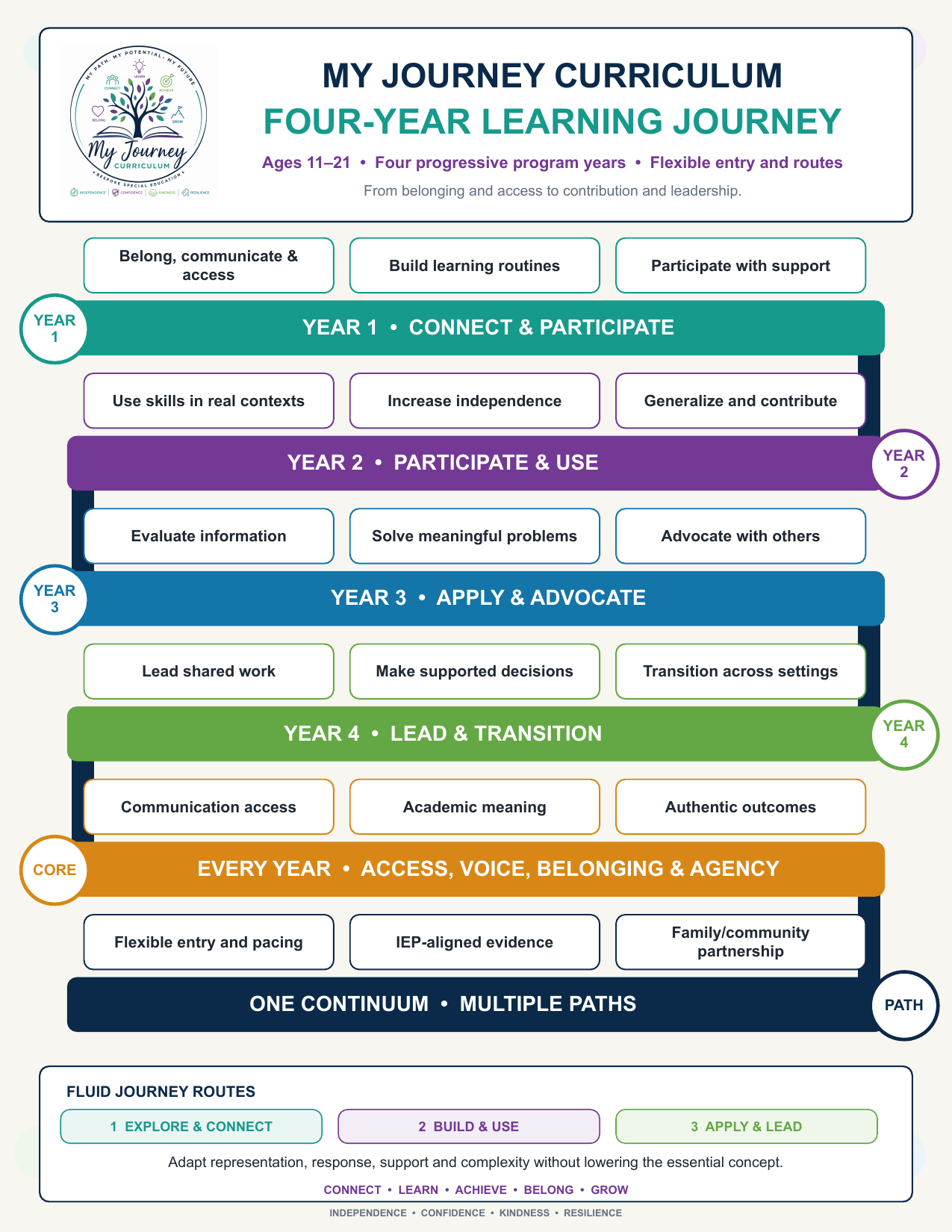
Across 144 weeks, 24 interdisciplinary units build from belonging and access toward participation, advocacy, leadership, and transition—while keeping communication, academic meaning, and authentic outcomes at the center.
24 interdisciplinary units
Each program year contains six six-week units. Years describe a teaching sequence—not ability—and may be taught in order, rotated as a four-year cycle, or selected to support an individualized course of study.
Year 1
Identity, communication, belonging, and contribution.
Create an accessible learner profile and community exhibition or map.
Body awareness, healthy choices, safety, and help-seeking.
Create a personal health and safety plan and share a wellness demonstration.
Maps, time, money, transportation, and community movement.
Plan and complete or simulate an accessible local journey.
Living things, environments, resources, and responsibility.
Complete a growing or care project and environmental action showcase.
Design, science, art, music, drama, and technology.
Complete a design-and-make challenge with an accessible presentation.
Strengths, choices, work, support, and adult-life preparation.
Lead a My Journey portfolio, enterprise or work task, and transition presentation.
Year 2
Self-expression, rights, responsibilities, and community participation.
Use an accessible advocacy product to communicate a community priority.
Relationships, wellbeing, consent, and informed health choices.
Create and use a personalized wellbeing and healthy-relationships plan.
Travel, public places, services, schedules, and civic participation.
Plan and carry out an accessible community participation task.
Weather, resources, household decisions, and sustainability.
Complete a practical resource-saving project using evidence and data.
Design thinking, enterprise, tools, media, and everyday technology.
Design, make, improve, and present a useful product or service.
Work routines, home responsibilities, teamwork, and contribution.
Complete a supported work or home-life project with evidence of contribution.
Year 3
Identity, culture, representation, rights, and self-advocacy.
Create and share an accessible self-advocacy or cultural identity project.
Healthcare access, consent, boundaries, risk, and personal safety.
Practice and document a personalized healthcare and safety process.
Independent travel, public services, geography, and civic systems.
Plan and evaluate a journey that uses community or public services.
Evidence, environmental systems, data, and collective action.
Investigate a local issue and contribute to an evidence-informed action.
Media literacy, digital tools, audience, and public communication.
Create an accessible media product for a real audience and purpose.
Career exploration, money decisions, services, and adult-life planning.
Build a career and adult-services action plan supported by practical evidence.
Year 4
Supported decision-making, teams, preferences, rights, and direction.
Lead an accessible person-centered planning or decision-making meeting.
Coordinated health, relationships, consent, regulation, and safety planning.
Create, communicate, and rehearse a personalized adult-life plan.
Transportation, public systems, community roles, and civic participation.
Complete a supported community journey and meaningful civic action.
Home routines, resources, budgeting, sustainability, and chosen support.
Demonstrate a sustainable home-life routine and resource plan.
Problem solving, creation, collaboration, and contribution.
Complete and present a learner-directed capstone for a real audience.
Work, further learning, services, relationships, and adult-life transition.
Lead a transition portfolio and next-steps presentation across settings.
Curriculum at a glance
The Four-Year Learning Journey brings the full progression and the three Fluid Journey Routes together on one page. Use it for planning conversations with educators, school leaders, families, and learners.
Accessible PDF · 1 page · Letter size
 Open full-size poster ↗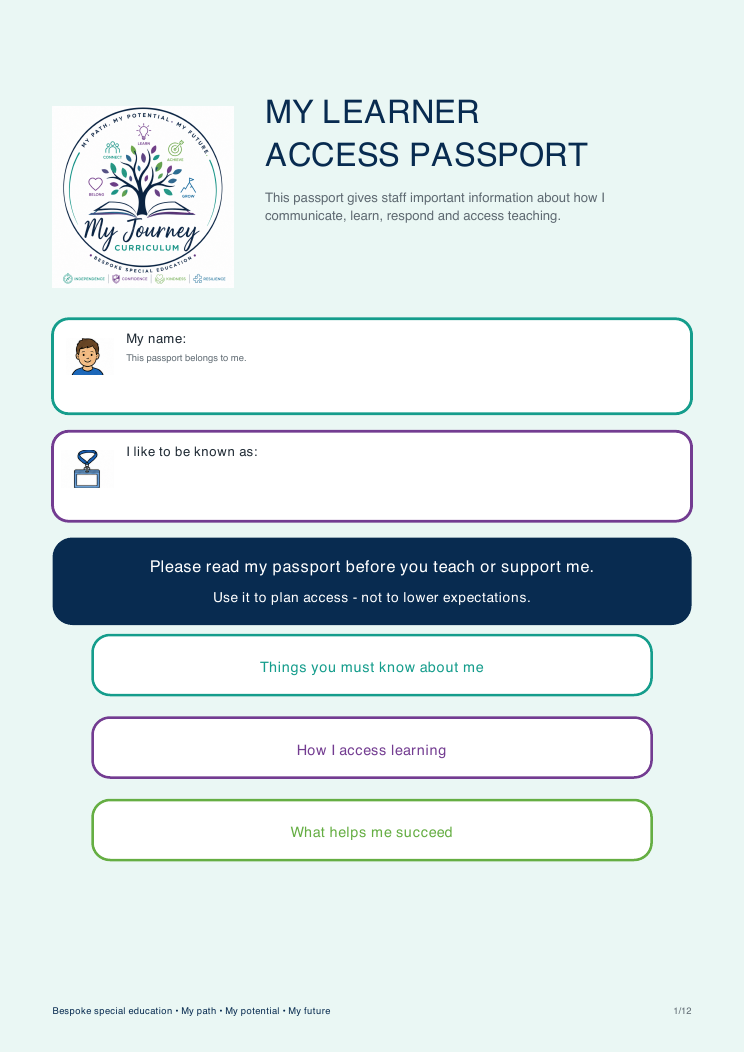
Free learner-owned resource
The 12-page My Learner Access Passport helps a learner, family, and team record how the learner communicates, responds, regulates, and accesses teaching. Use it to plan access—not to lower expectations.
Free PDF · 12 pages · Print or complete digitally
Learning beyond the worksheet
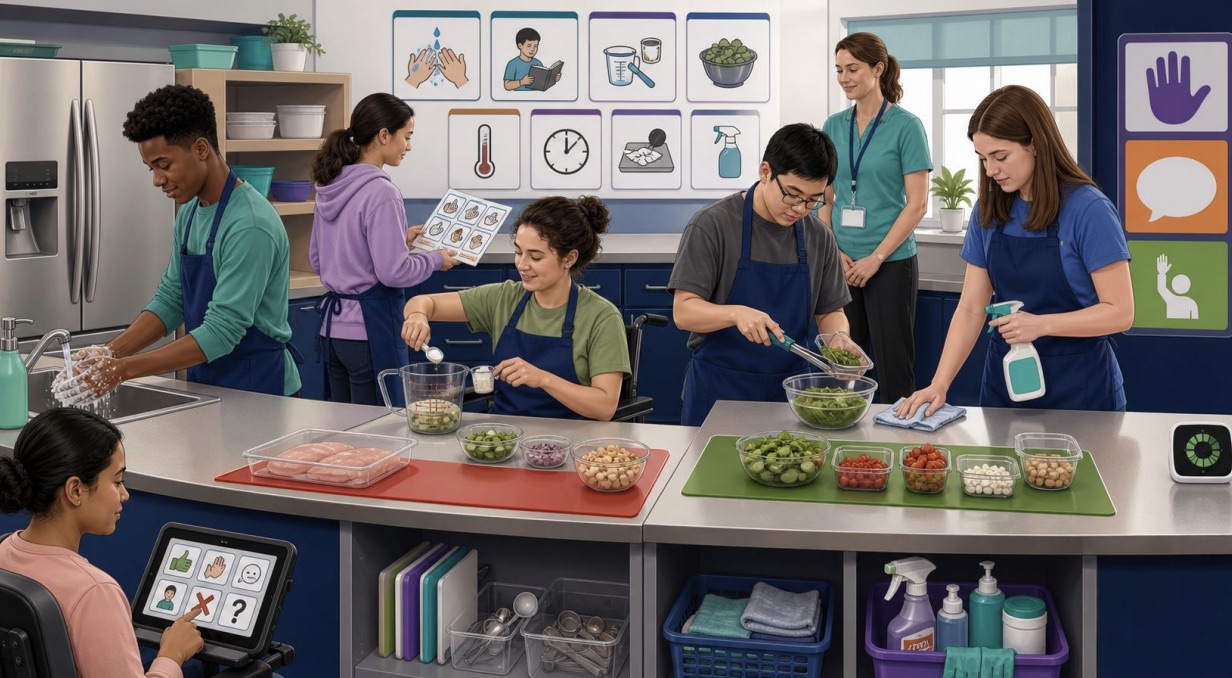
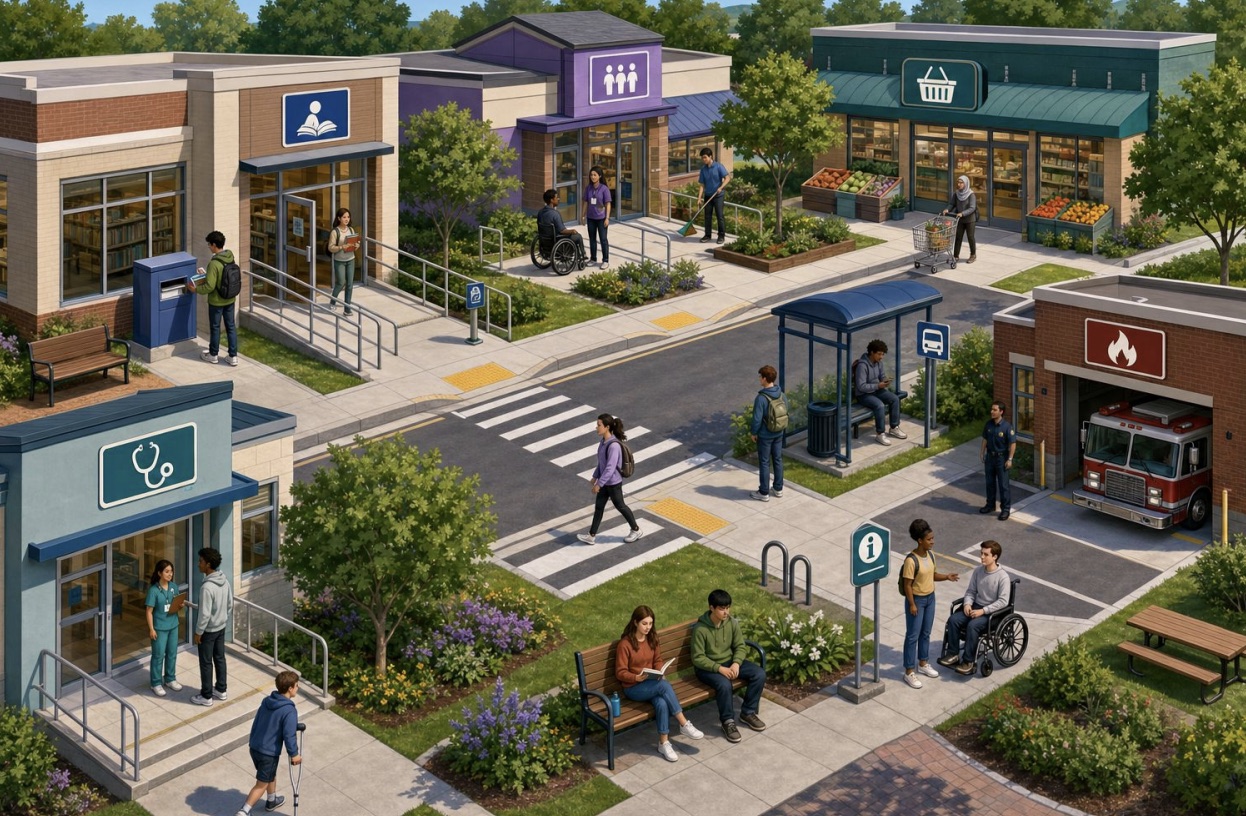
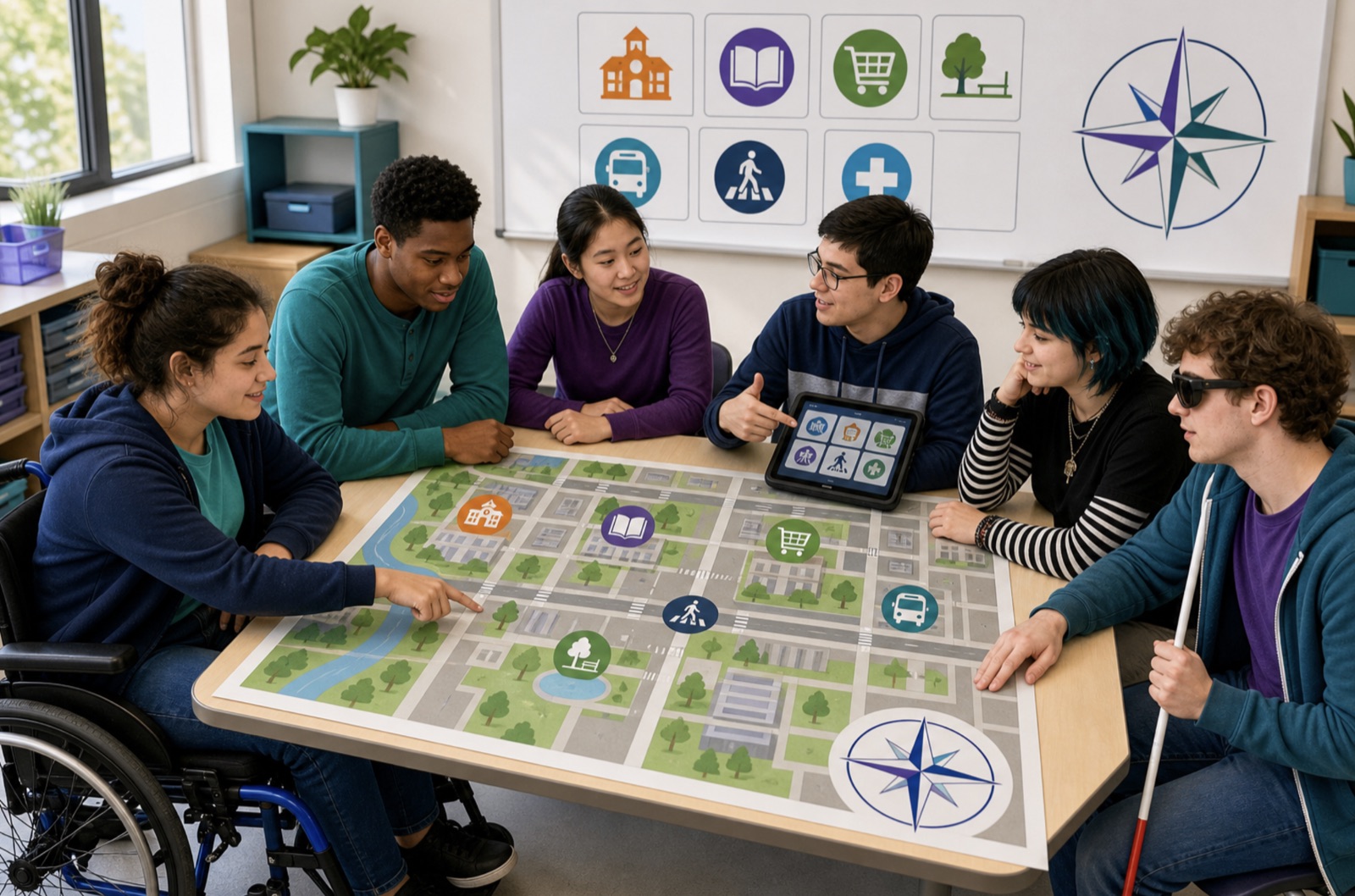
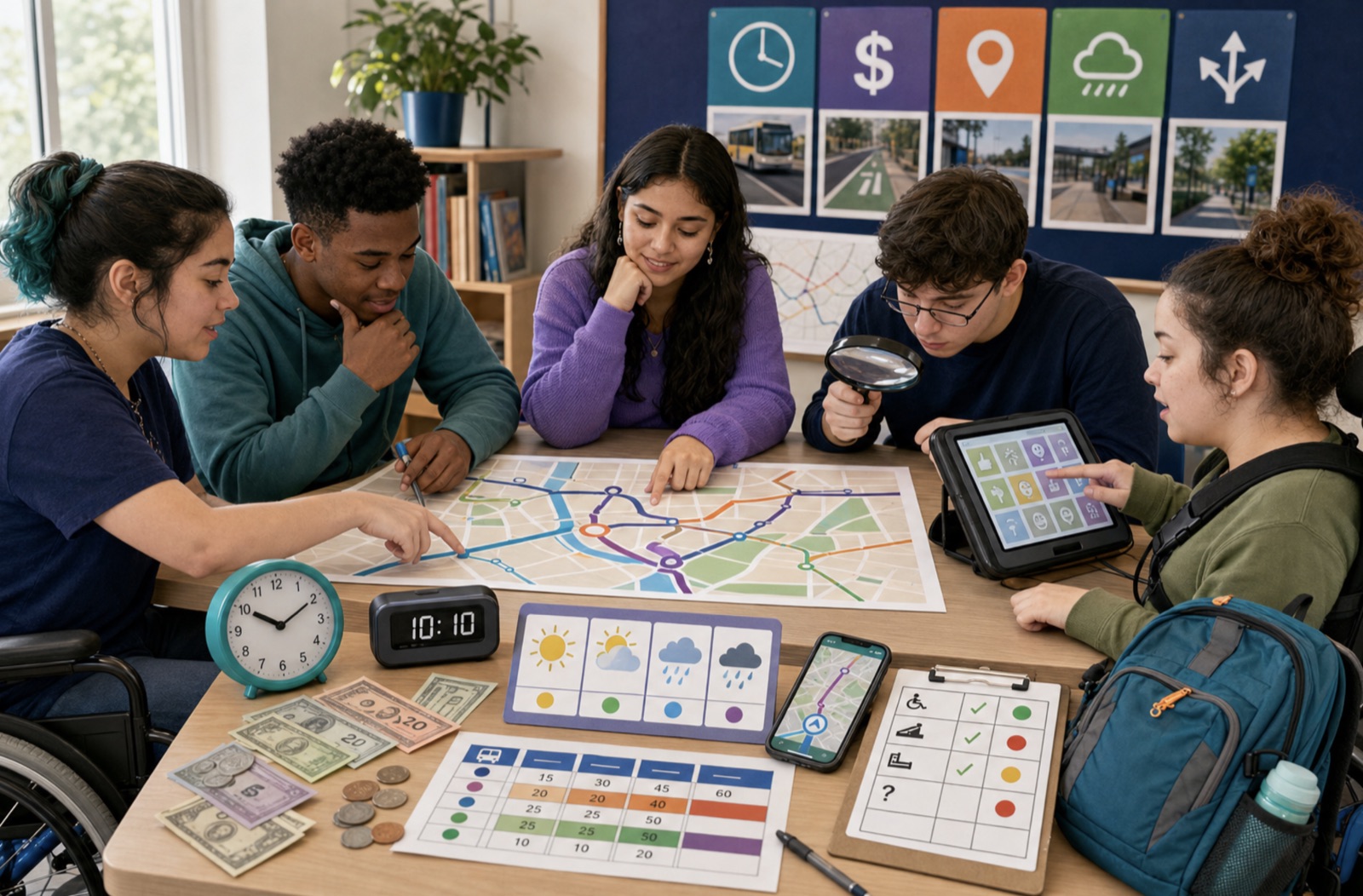
Health, community, navigation, communication, and decision-making come together in authentic situations learners can recognize and use.
Curriculum domains
Every route protects the essential concept. Access changes; expectations for meaningful participation and growth do not.
Build a reliable communication system and use language, symbols, text, and media to understand, connect, create, and advocate.
Understand quantities, relationships, patterns, space, measure, and data—then use mathematics to make decisions in daily and adult life.
Investigate living and physical systems, use evidence, and apply scientific knowledge to health, safety, environment, and design.
Develop place, time, evidence, culture, economics, civic identity, and practical community participation.
Learn body autonomy, health, emotional capacity, respectful relationships, safety, and informed decision-making.
Develop technique, imagination, cultural participation, expression, collaboration, critique, and public contribution.
Use tools, movement, practical routines, and outdoor environments to build competence, safety, teamwork, and independence.
Build self-determination and coordinated experience in education, employment, independent living, and community participation.
Six ready-to-teach models
Recognize and use numbers that help me act in school or the community.
number · means · find · checkUse a map, schedule, and safety information to plan how to reach a destination.
route · depart · arrive · accessibleIdentify what a plant needs and use evidence from a growing investigation.
need · condition · observe · evidenceCommunicate permission or refusal, recognize a boundary, and identify a safe help-seeking action.
consent · boundary · stop · reportChoose materials, follow a safe design process, and improve a product for a real user.
user · material · criteria · improveUse money, communication, and checking strategies in a buying or selling task.
price · total · change · receiptInside the materials
Every activity protects the learning goal while offering multiple ways to notice, communicate, decide, and act.
Explore free samples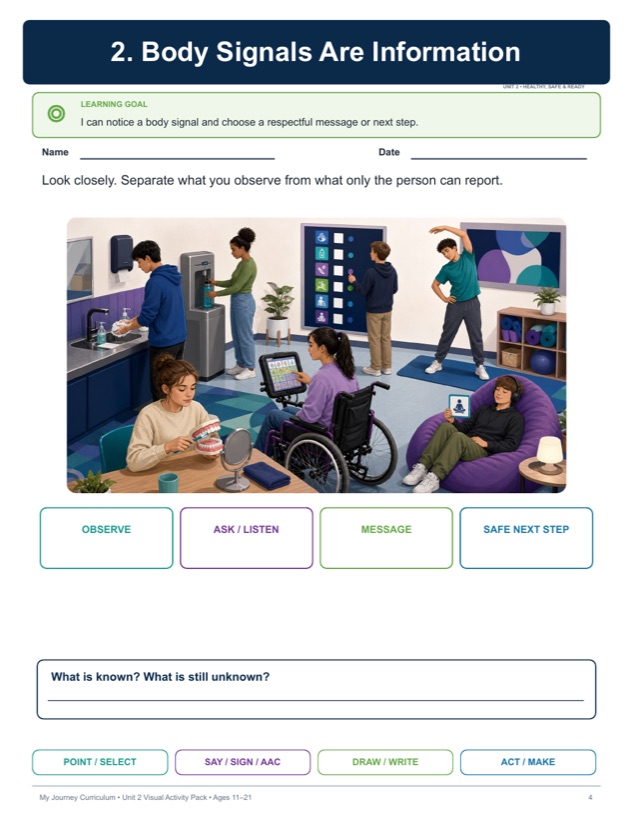
Observe, ask, communicate, and choose a safe next step.
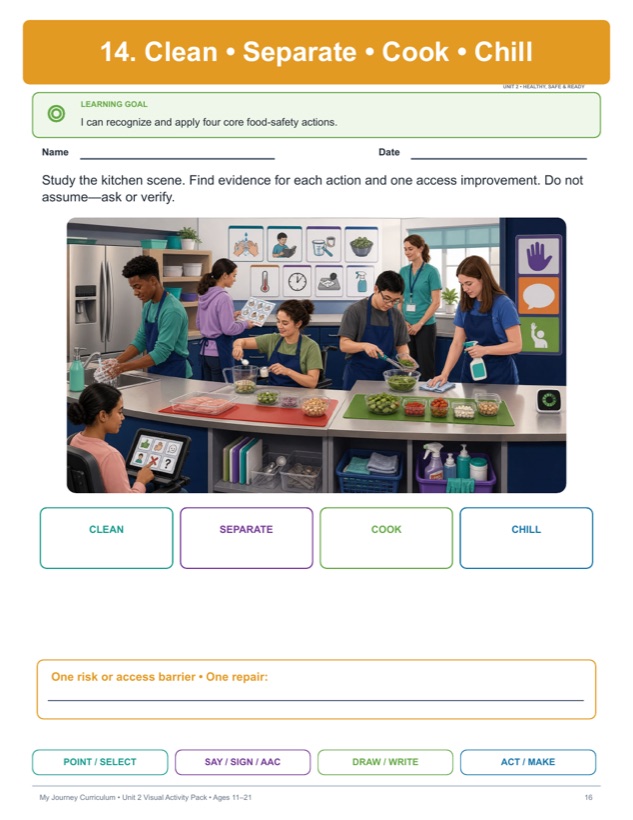
Apply health and food-safety learning in an authentic setting.
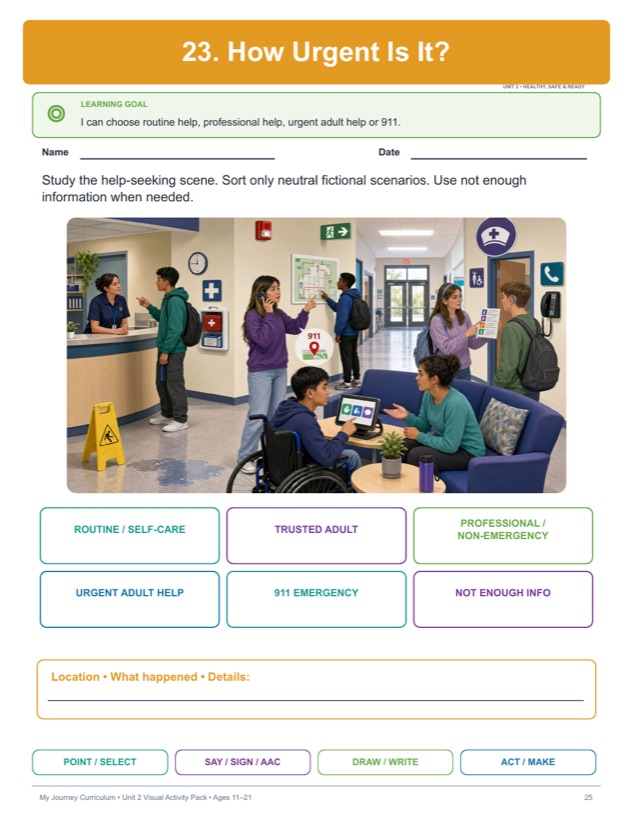
Practice communication, urgency, and asking for the right support.
Selected previews from the Unit 2 Visual Activity Pack. More downloadable examples are available in the free resource library.
Explore the work
Explore free visual supports, lesson samplers, literacy and math activities, planning tools, and the interactive Year 1 demonstration.
Explore free resources