BELONG
“I am safe, known, respected, and represented.”
Predictable routines, identity-affirming materials, sensory and emotional access, and authentic peer membership.
 My Journey CurriculumStart a conversation
 The My Journey learning model
Five learner promises shape every lesson. Three fluid routes preserve a shared concept while varying access, response complexity, abstraction, and independence.
The five-part learner journey
“I am safe, known, respected, and represented.”
Predictable routines, identity-affirming materials, sensory and emotional access, and authentic peer membership.
“I can communicate and link new learning to my life.”
AAC always available, explicit prior-knowledge links, partner learning, and home and community connections.
“I receive clear, explicit, challenging instruction.”
Small steps, modeling, concrete and visual supports, up to four priority words at once, and frequent checks.
“I can use learning for a meaningful purpose.”
Choice, problem solving, performance, creation, community tasks, and age-respectful functional application.
“I can reflect, generalize, and take the next step.”
Action-oriented feedback, self-monitoring, prompt fading, fresh examples, and transfer across settings.
Fluid Journey Routes
Routes are teaching decisions, not student labels. A learner may use a different route in literacy, mathematics, technology, or any other domain—and should move whenever evidence points to a better access point.
Notice, anticipate, choose, match, participate, and communicate a preference or key idea.
More consistent response, a larger choice field, purposeful communication, reduced prompting, and the same skill with a fresh example.
Identify, sort, sequence, describe, follow a process, and solve a supported practical problem.
Greater accuracy, a longer sequence, strategy choice, key vocabulary, less intrusive prompting, and transfer to a second setting.
Explain, compare, reason, create, evaluate, generalize, self-monitor, and apply independently.
Independent strategy selection, evidence-based explanation, self-correction, novel application, leadership, and generalization.
40–50 minute lesson route
Enter safely, know what is happening, and choose a regulation or access support.
Make a link to secure learning or personal experience using any reliable response mode.
Use up to four priority words and understand why the learning matters.
Watch, handle, predict, imitate, question, and contribute to a shared example.
Choose, solve, make, perform, explain, or apply the concept for a real purpose.
Show one thing learned, identify useful support, and attempt transfer.
Access in action
Communication, regulation, movement, personal care, and visual structure are part of the learning design—not rewards or last-minute accommodations.
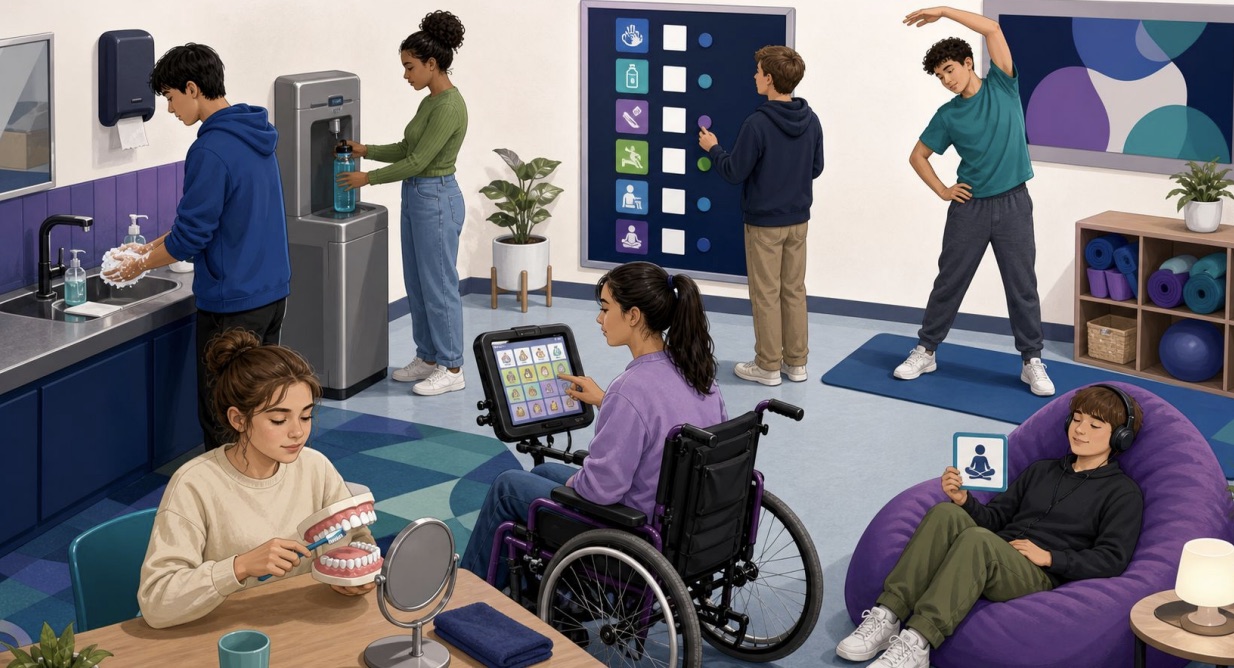
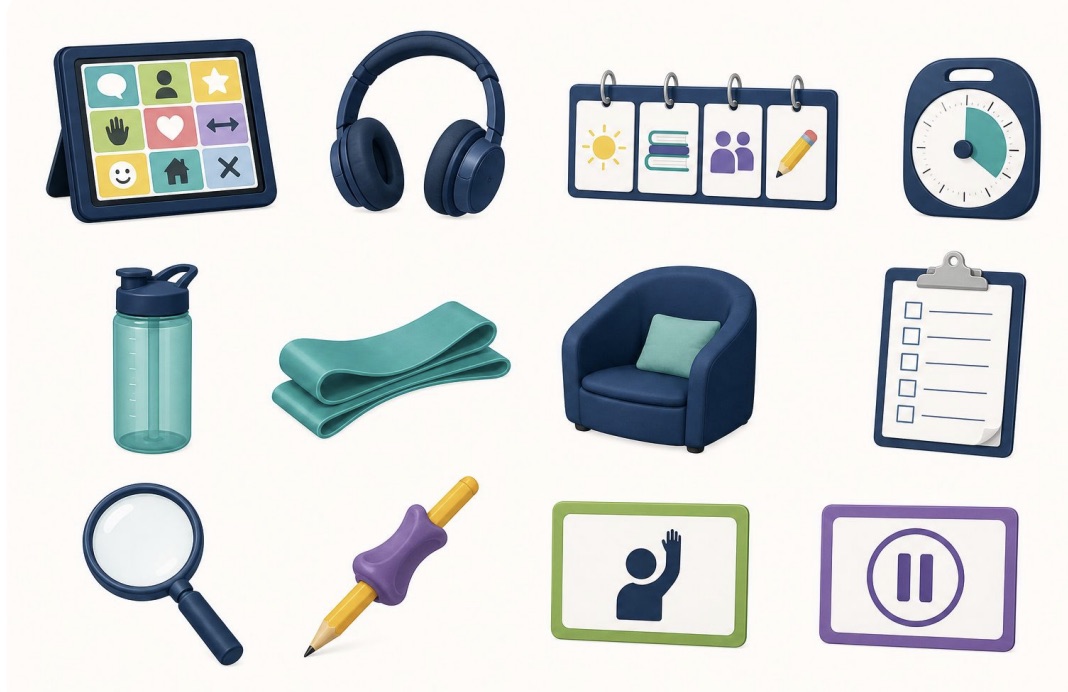
Non-negotiable access
Presume competence and use age-respectful topics, texts, tools, images, and community roles.
Keep each learner’s full communication system available all day and model vocabulary on AAC.
Reduce visual and linguistic load without reducing the essential idea; allow adequate processing time.
Plan movement, sensory, positioning, hearing, vision, assistive technology, and personal-care access with specialists.
Teach for transfer by varying materials, people, wording, and settings one variable at a time.
Use the least intrusive effective prompt, record it, and plan systematic fading from the start.
Build authentic peer belonging and access to electives, clubs, performances, fieldwork, and shared projects.
Use concrete experience before pictorial and abstract representation whenever it adds meaning.
Weekly teaching rhythm
Baseline response, communication mode, interests, misconceptions, and access needs.
Guided accuracy, vocabulary comprehension, imitation, and strategy use.
Consistency, reduced prompting, strategy choice, and explanation.
Transfer beyond the teaching example through practical, creative, or community use.
Independent performance, generalization, self-assessment, and next-step planning.
Daily routine examples
These visual timetable examples show how predictable routines, high- and low-demand periods, communication access, regulation, and the five-session teaching rhythm can work together.
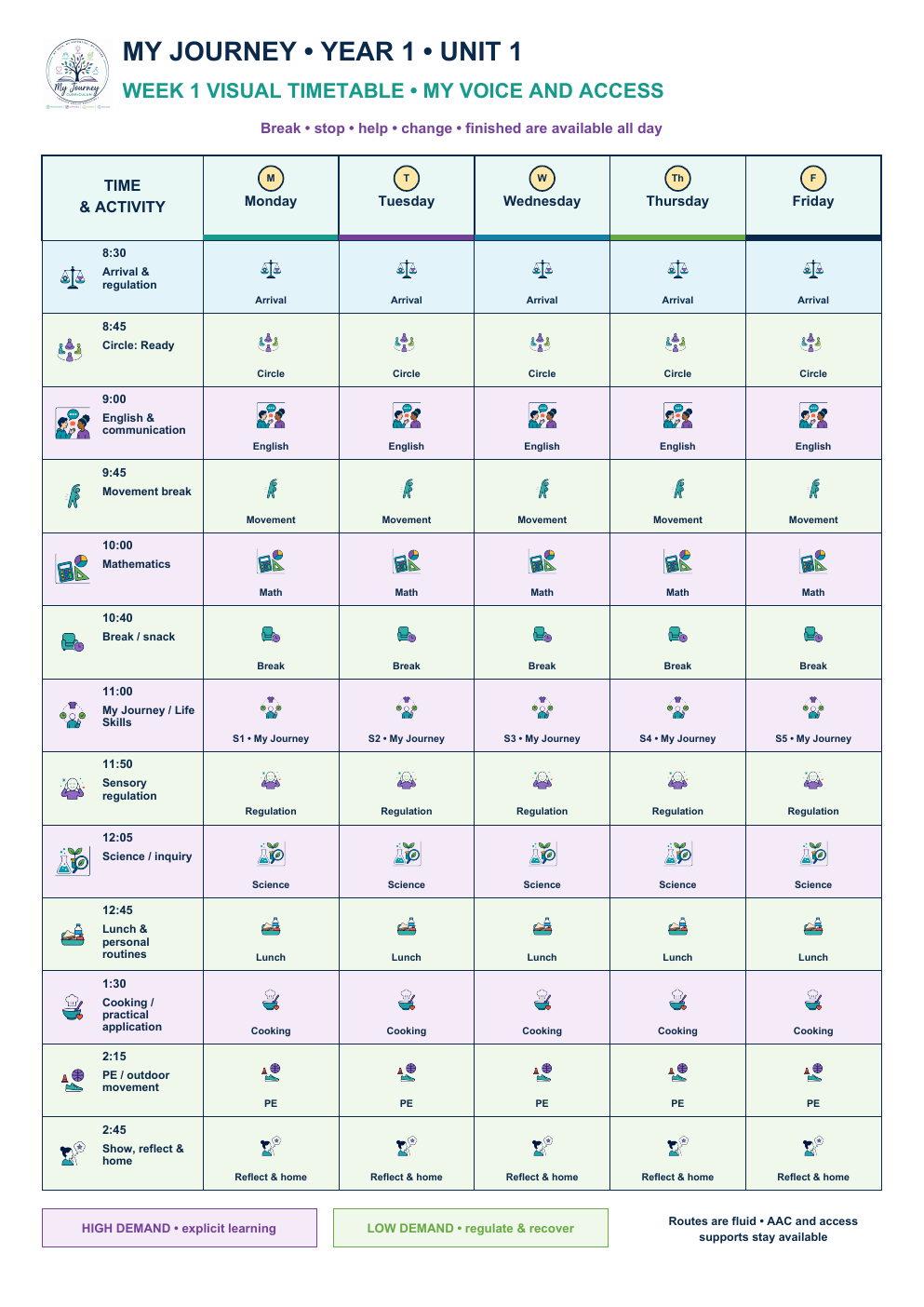
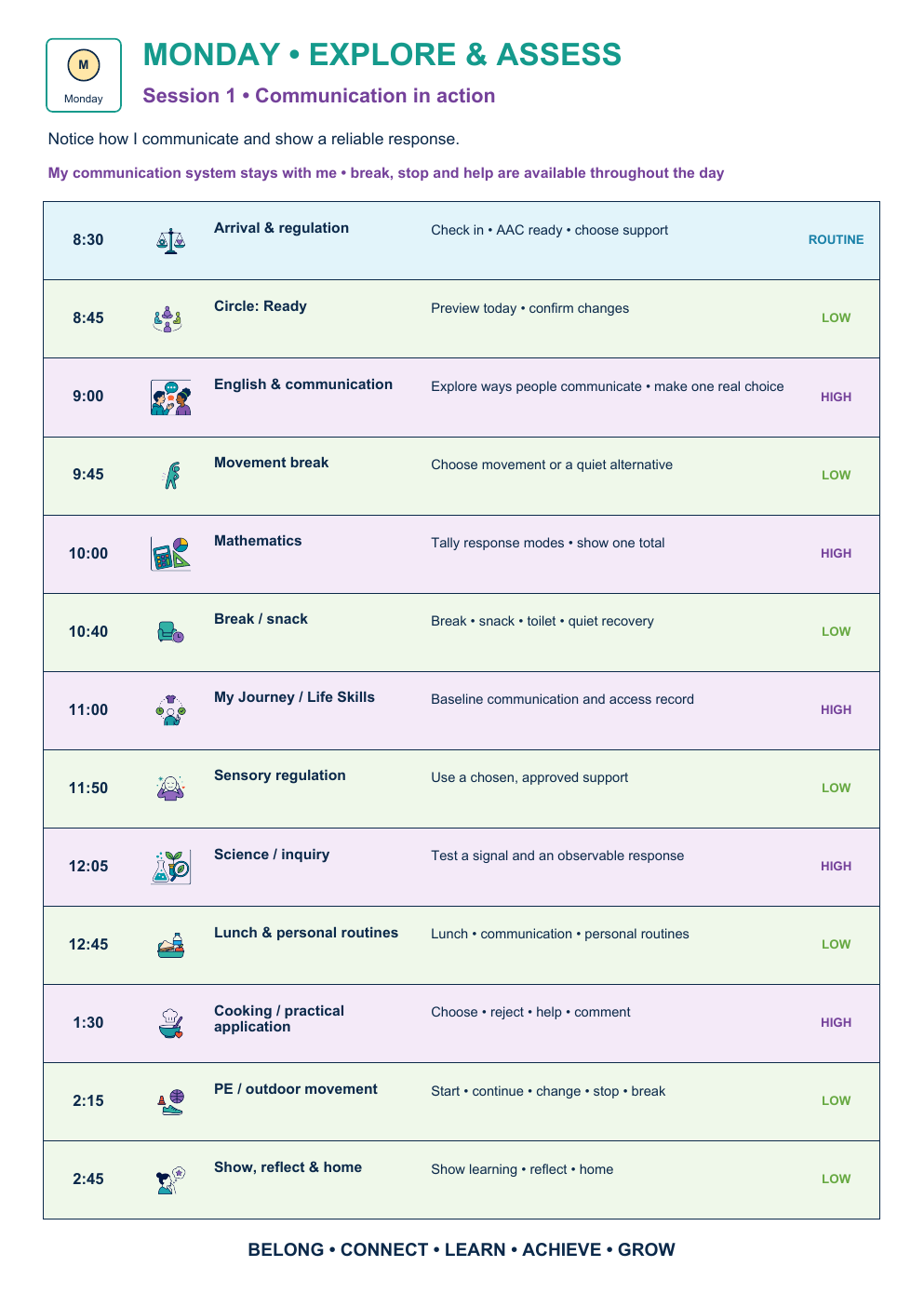
These are examples, not fixed schedules. Teams can adapt timing and activities while preserving learner communication, regulation, choice, and access throughout the day.