Accommodation
Changes how a learner accesses information, participates, or responds without changing the essential learning target.
Example: audio and text together, AAC response, extended time, reduced visual field, or accessible seating.
My Journey CurriculumStart a conversation Access, differentiation & LRE
Accessible instruction begins by identifying the barrier—not lowering expectations automatically. Supports should help a learner understand, participate, communicate, and show what they know with greater agency.
Use the right tool
Changes how a learner accesses information, participates, or responds without changing the essential learning target.
Example: audio and text together, AAC response, extended time, reduced visual field, or accessible seating.
Adjusts teaching routes, examples, grouping, practice, feedback, or scaffolding so learners can work toward a shared meaningful concept.
Example: model with real objects, then pictures and symbols; vary prompting and practice while keeping the purpose shared.
Changes the complexity, breadth, or expected level of the learning outcome. It should be intentional, individualized, and clearly understood by the team.
Example: identify the safest option from two choices while peers compare and justify several options using written evidence.
Aids, services, and other supports that enable a learner to be educated with nondisabled peers to the maximum extent appropriate.
Example: assistive technology, adapted materials, staff consultation, peer support, visual schedules, or behavior support.
Six access levers
Select supports because they address an observed barrier. The same learner may need different combinations across domains, tasks, people, and environments.
Real objects, photographs, symbols, diagrams, demonstrations, audio, captions, tactile information, plain language, and repeated models.
AAC available all day, modeled vocabulary, partner wait time, yes/no systems, repair strategies, interpreters, and multiple ways to initiate.
Pointing, selecting, eye gaze, movement, speech, typing, drawing, acting, building, or supported demonstration—matched to the learning target.
Predictable routines, sensory access, movement, lighting, sound, seating, personal care, emotional safety, and planned regulation breaks.
Chunked steps, extra processing time, fewer competing items, visual finish points, planned repetition, and practice across real contexts.
Peer models, co-teaching, specialist input, assistive technology, explicit prompting, prompt fading, and staff consistency.

Free communication resource
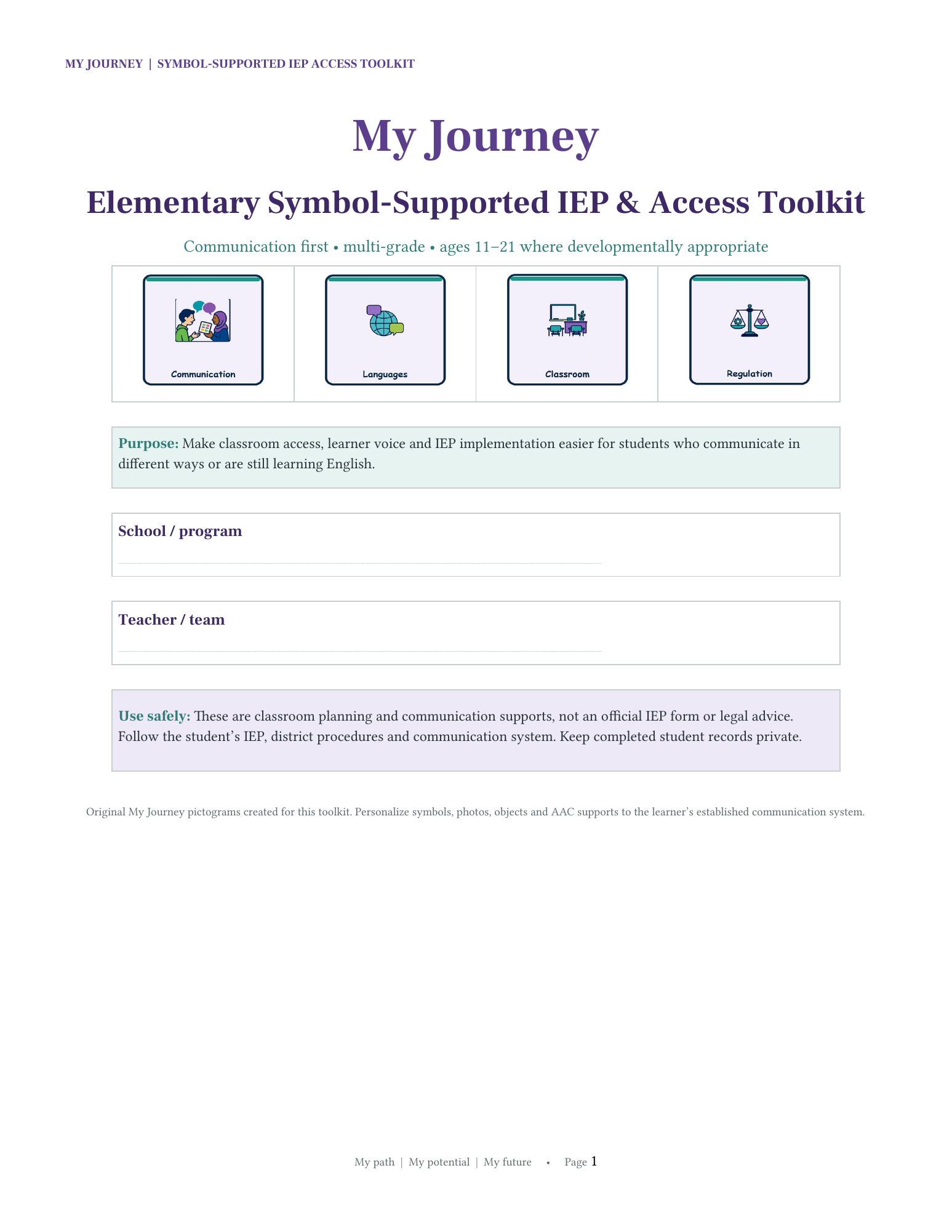
The Communication & Access Toolkit uses original My Journey pictograms to help elementary learners ask for help, stop, take a break, make choices, communicate feelings, regulate, follow routines, and repair a misunderstood message.
Use the ready-to-print PDF or adapt the editable Word version around a learner’s language, communication system, culture, sensory access, and daily environments.
Free service-model examples
These practical walkthroughs show how instructional targets, accommodations, prompting, independence, and brief progress data can work together in different special-education service models.
View all 19 slides ↗Pull-out example · Literacy and math
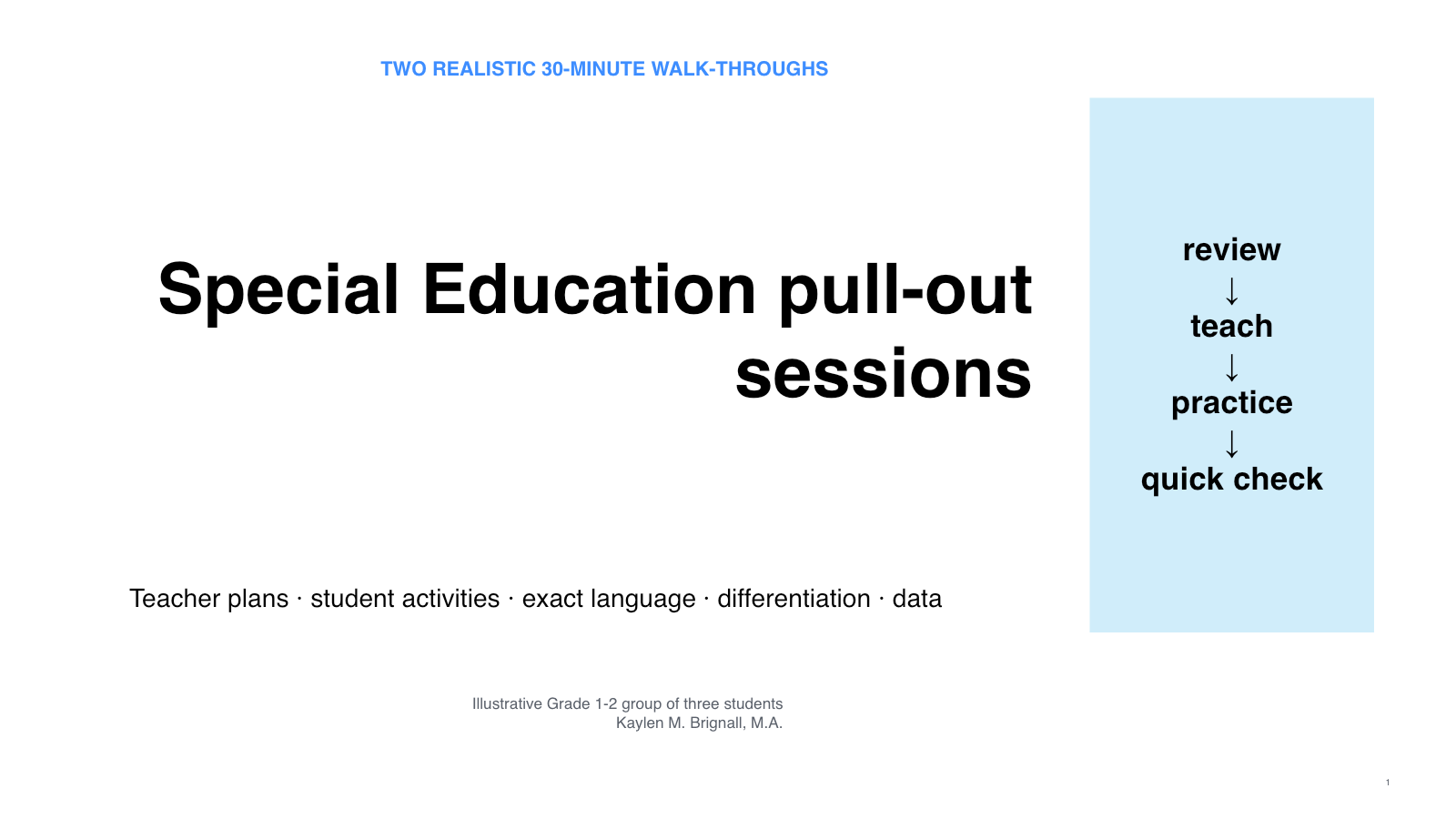
Follow complete CVC decoding and addition-within-10 sessions from regulation and review through explicit teaching, guided practice, independent work, and an exit probe. Includes exact teacher language, differentiation, prompt fading, fictional data examples, and a reusable run sheet.
View all 30 slides ↗Push-in example · Literacy and math
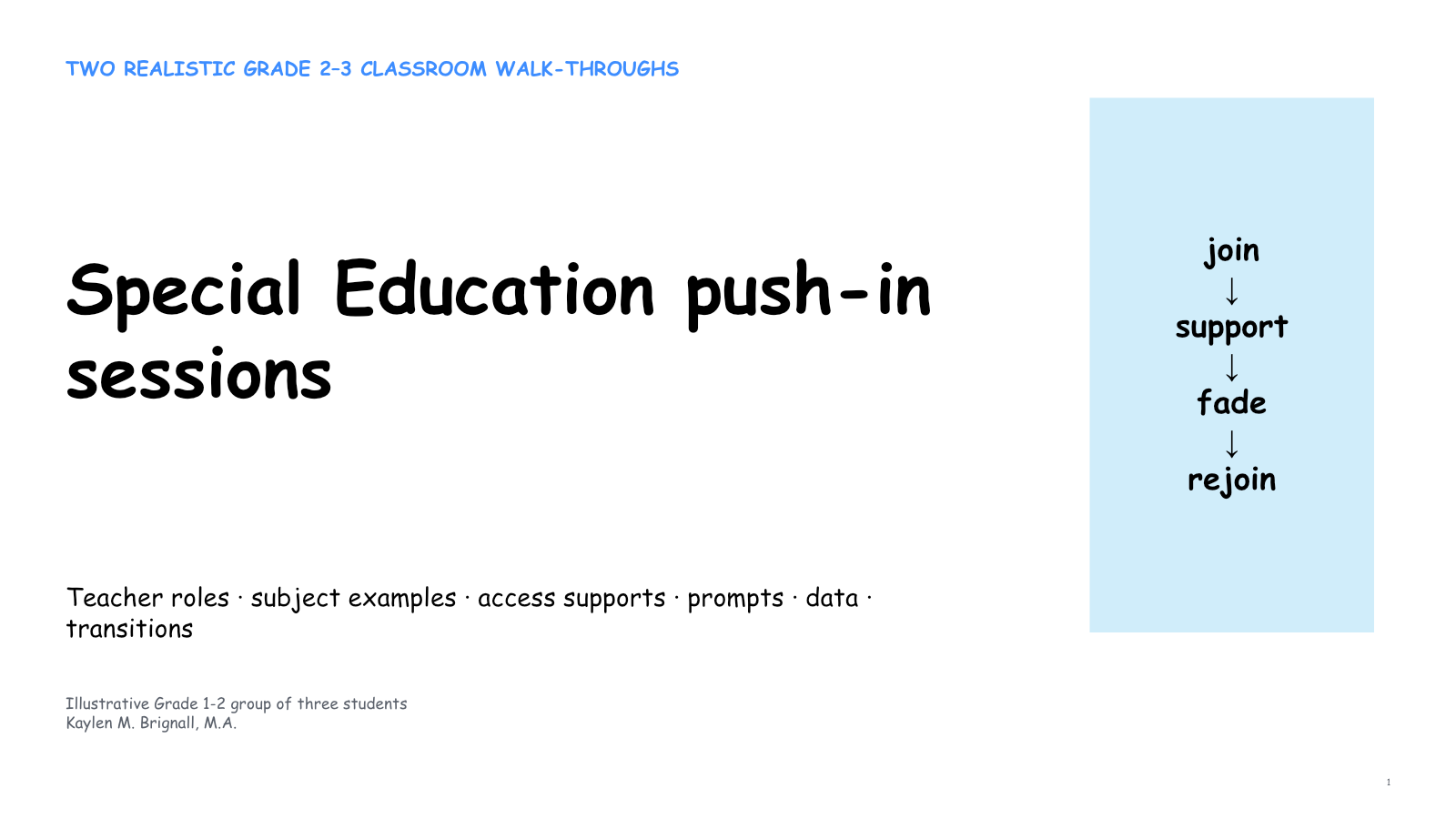
See how a special educator can join, support, fade, and rejoin without taking over the lesson. The literacy and mathematics examples keep the class target visible while modelling access tools, shared adult roles, response options, prompt fading, brief progress data, and a purposeful hand-off back to the class.
A responsive decision cycle
What understanding, action, communication, or real-life outcome matters?
Is the barrier in language, sensory access, movement, communication, memory, attention, emotional safety, task design, or the environment?
Provide access without adding unnecessary dependence or removing the purpose of the task.
Do not simply place a tool nearby. Model it, practice it, and make sure communication partners know how to respond.
Record participation, response mode, prompting, accuracy, initiation, regulation, and use in a new situation.
Keep supports that provide genuine access, fade prompts that create dependence, and return individualized decisions to the IEP team.
Least restrictive environment
Under IDEA, learners with disabilities are educated with nondisabled peers to the maximum extent appropriate. Removal from the regular educational environment occurs only when education there cannot be achieved satisfactorily with supplementary aids and services.
Placement is not chosen by disability label, program availability, or convenience. It is based on the IEP, determined at least annually by a knowledgeable group that includes parents, and considered across a continuum of options.
Before changing placement
What supplementary aids and services have been considered, tried, and supported with adequate fidelity?
Does the learner have reliable communication and assistive technology across the full school day?
Have general and special educators, related-service providers, and the family planned together?
Are curriculum materials, assessment methods, the environment, and staff supports accessible?
What are the benefits and possible harmful effects of each placement option for this individual learner?
How will the learner participate with nondisabled peers in academic, extracurricular, and nonacademic settings?
Official foundations
This page offers instructional examples, not legal advice or a placement recommendation. Accommodations, modifications, services, assessment participation, and placement remain individualized IEP team decisions.
Connect plan and practice
See how present levels, goals, services, supports, and progress evidence can connect with daily teaching.
Explore IEPs