Not observed
Check access, motivation, communication, sensory and physical needs, and task validity before judging learning.
 My Journey CurriculumStart a conversation
 Assessment, IEP alignment & evidence
My Journey is a curriculum framework—not an IEP, placement decision, alternate-assessment determination, or legal checklist. It supports teams in turning individualized priorities into accessible, meaningful instruction.
The assessment cycle
Review present levels, IEP goals, previous data, communication, access, behavior as communication, interests, culture, and transition assessments.
Name the understanding that stays constant across Journey Routes and response modes.
Include the condition, behavior, criterion, and how independence and generalization will be judged.
Collect brief evidence during authentic instruction—not only isolated tests or worksheets.
Separate content knowledge from motor, speech, reading, writing, and compliance demands that are not the target.
Maintain, fade support, extend complexity, generalize, reteach through a new representation, or revise access.
My Journey independence scale
The scale records both performance and the level of support, so progress can guide prompt fading, transfer, and future instruction.
Check access, motivation, communication, sensory and physical needs, and task validity before judging learning.
Repeat with consistent cues and identify the earliest prompt that can be faded.
Fade one prompt dimension, vary the example slightly, and increase initiation or sequence length.
Use fresh material, a new person or new wording, and invite explanation or self-check.
Increase complexity, authentic responsibility, leadership, or connection to a new outcome.
Unit planning essentials
Essential question and authentic outcome
Grade-level or state standards and alternate elements, when applicable
Essential concepts shared by all three Journey Routes
Student IEP and transition priorities naturally addressed
Priority vocabulary and AAC additions
Age-respectful texts, media, objects, and community partners
Sensory, physical, vision, hearing, behavior, language, and AT access
Authentic applications and inclusive or peer opportunities
Assessment task, evidence type, prompt plan, and generalization probe
Family and cultural connection, permissions, safety, and risk assessment
Generalization in real settings
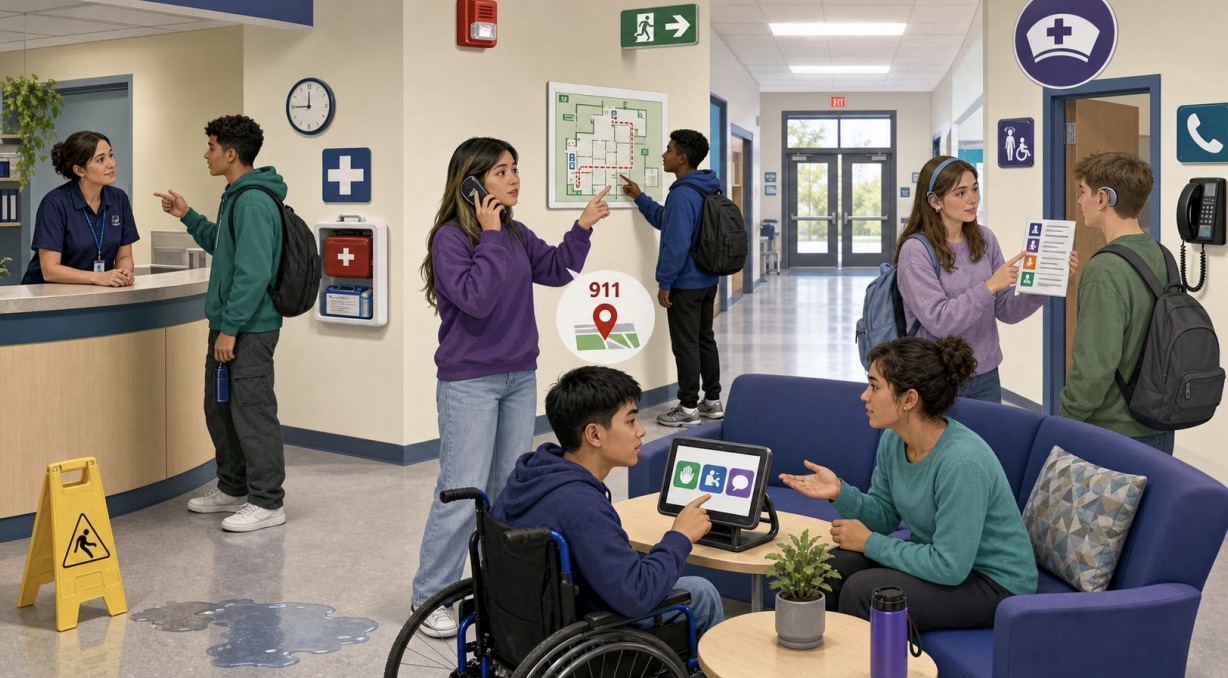
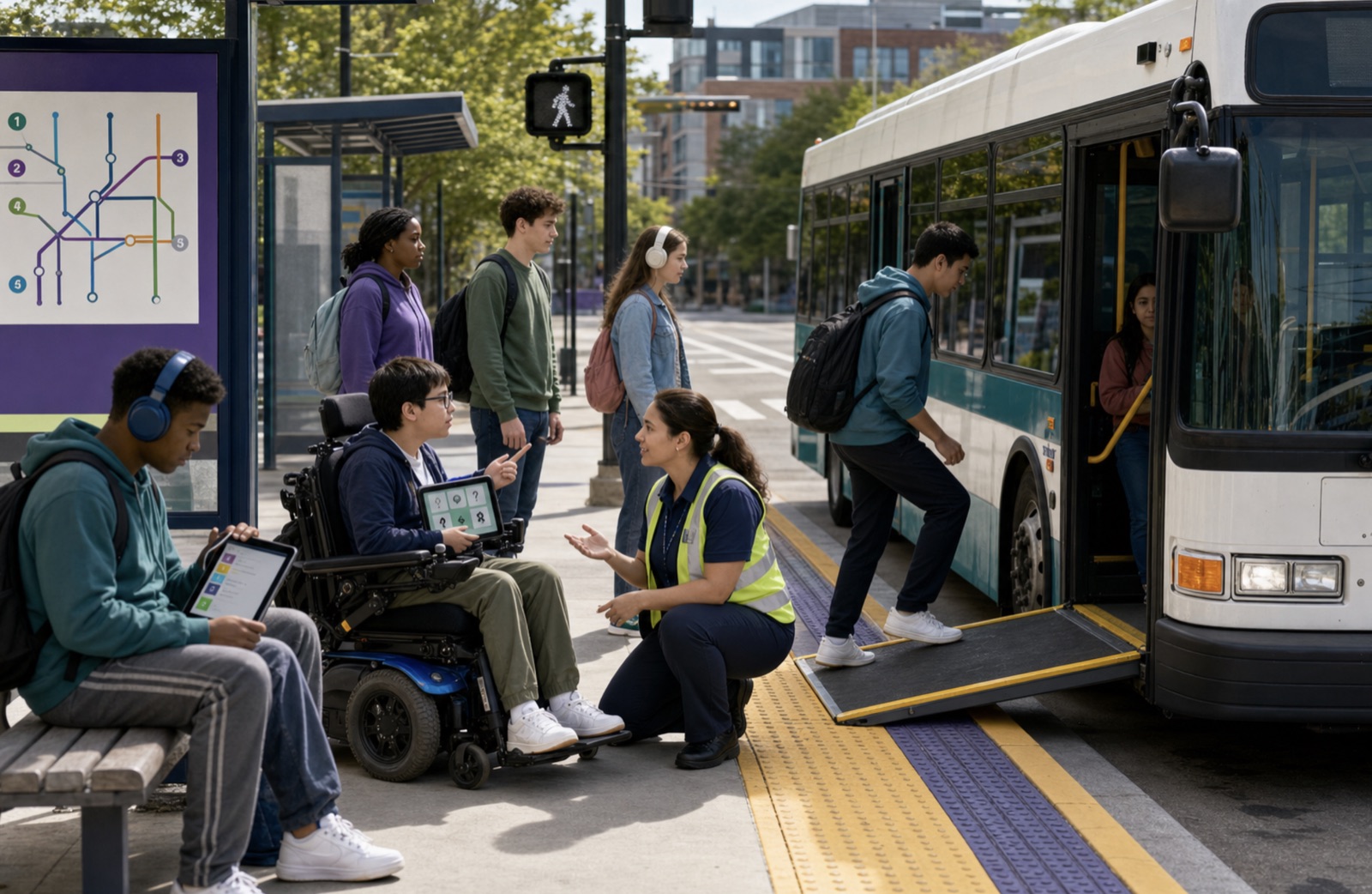
Evidence becomes more useful when learners apply communication, safety, navigation, and self-advocacy across people, places, and situations.
Implementation readiness
Name a curriculum owner and protect time for multidisciplinary planning, moderation, and community coordination.
Complete the current state and district crosswalk and review course, credit, diploma, and credential implications.
Keep present levels, goals, services, accommodations, and specially designed instruction individualized.
Make AAC and AT systems available and modeled; prepare vocabulary and response-repair strategies ahead.
Review sensory, vision, hearing, physical, language, and technology access with the relevant specialists.
Use age-respectful resources, an explicit lesson route, planned prompting and fading, repetition, and generalization.
Capture response mode, context, prompt level, accuracy, and generalization—then act on the evidence.
Plan student voice, culturally responsive content, authentic peer opportunities, and no public ability labels.
Complete risk assessments, medical plans, consent and media permissions, and safeguarding procedures.
Coordinate student participation, postsecondary goals, agencies, family partnership, and community experiences on the state timeline.
Important guardrail
District teams should complete an exact standards and local-policy crosswalk before adoption. Each learner’s IEP team determines goals, services, accommodations, assessment participation, and least restrictive environment using current official requirements.